


There is no single “perfect age” to start Spanish.
Starting young can give a child more years of exposure, but an older beginner has advantages too. A four-year-old learns through play, repetition and routines. A ten-year-old can read, notice patterns and ask why a sentence works. A teenager can connect Spanish to travel, school, family or future goals.
The better question is not “Did we start early enough?” It is “What kind of Spanish learning fits my child now?”
What changes as children get older?
Play + listening
Songs, stories, movement, routines, visual cues and understandable repetition.
Language + literacy
Conversation stays important while reading, writing and sentence building become more useful.
Structure + confidence
Older children can understand patterns and explanations, but may become more self-conscious about speaking.
Purpose + independence
Teenagers can learn strategically and connect Spanish to school, travel, family and future opportunities.
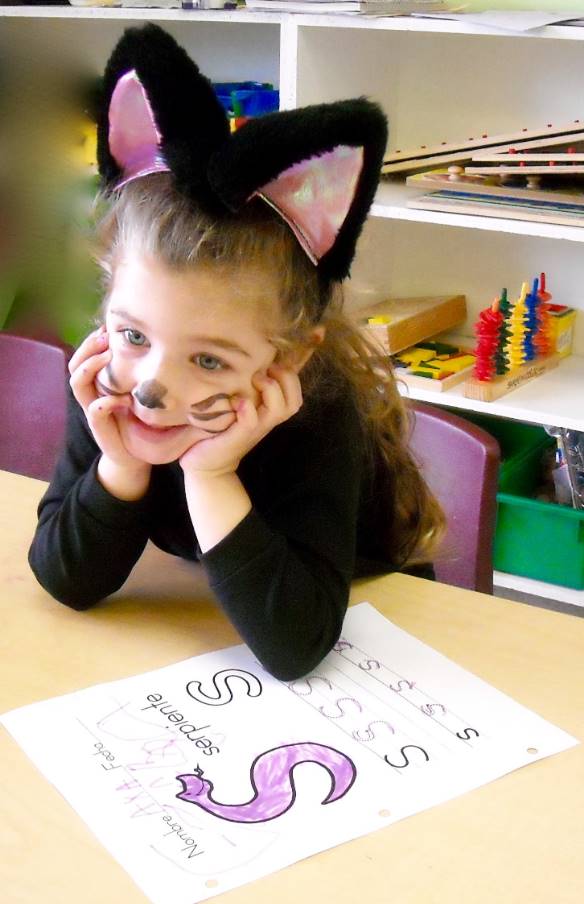
Young children do not need a miniature adult language course.
At three, four and five, children learn best when Spanish is attached to something they can see, hear, touch or do. A teacher can repeat the same useful phrase through a song, a story and a movement game without making the lesson feel repetitive.
Parents sometimes look for worksheets because they are visible proof that learning happened. But following a direction, joining a song, recognizing a phrase in a story or answering a familiar question can be more meaningful at this age.
What might Spanish look like year by year?
Familiarity first
Short activities, predictable routines, songs and actions help connect Spanish with meaning.
More participation
A four-year-old may anticipate familiar phrases, answer simple questions and use short expressions during play.
Early literacy joins in
Many five-year-olds can start connecting familiar spoken Spanish with letters and words while lessons remain active.
For younger learners
Program details can change by term, so confirm current ages, schedule, location and availability on the class page.
Preschool Spanish Class
Ages: 3 - 6 years
Welcome to our Preschool Spanish program! Here, children have the opportunity to learn Spanish through engaging play-based activities. Our curriculum is carefully designed to foster a love for language and exploration, with…
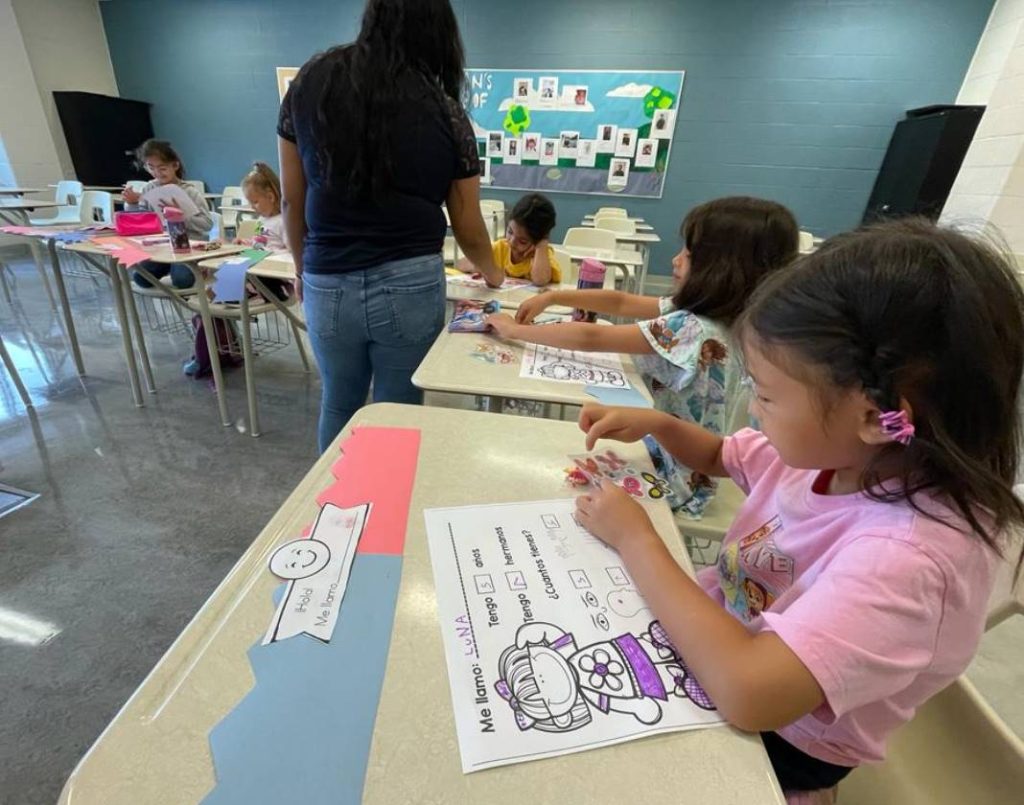
Elementary school is an excellent time to begin.
A child starting at six, seven, eight or nine is not late. They now have school skills that can help them learn: stronger memory for routines, growing literacy, better ability to follow multi-step instructions and more awareness of patterns.
Spanish can still be playful, but reading and writing become useful tools. Children can label, build sentences, read short passages and connect what they hear with what they see on the page.
The key is balance. A language should not become only a workbook subject just because a child is old enough to write.
Starting later comes with real advantages.
Older children can ask why a word changes or why a sentence is built a certain way.
Reading, memory strategies and independent practice can transfer to Spanish.
Travel, school, friendships and family can make the language personally meaningful.
A confident reader does not need to rediscover what reading itself is.
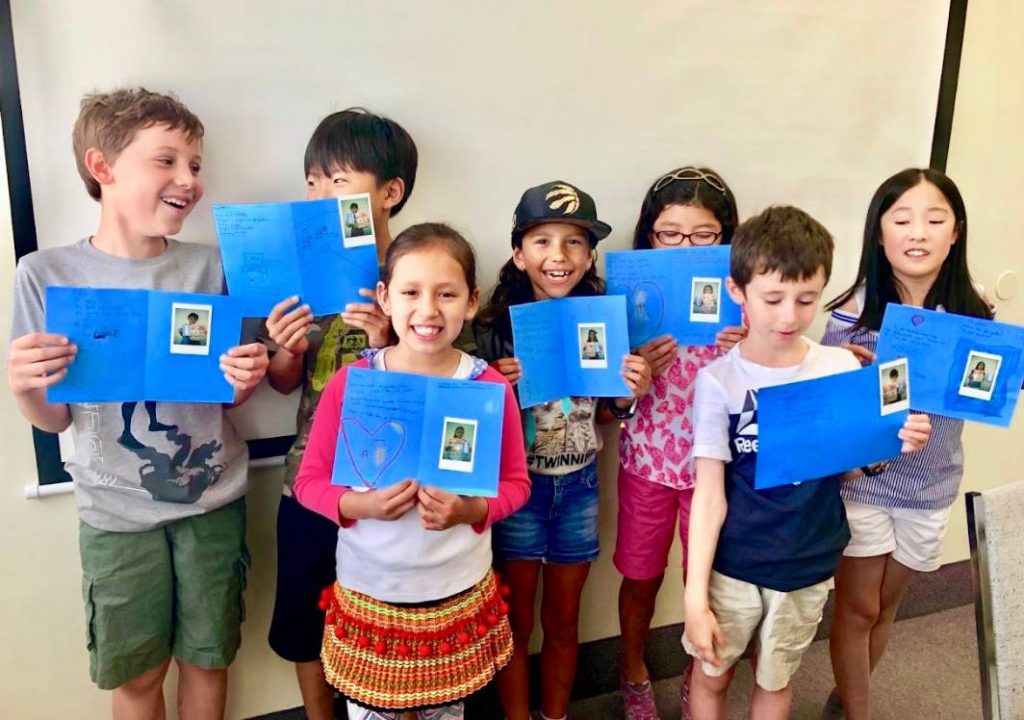
The challenge may be confidence, not ability.
Preteens can understand more detailed explanations, read longer material and work with increasingly complex language. At the same time, they may be much more aware of how they sound in front of other people.
A strong class makes mistakes feel normal. Children need enough safety to try a sentence before they are certain it is perfect. Otherwise, the learner who knows the most grammar can still be the one who speaks the least.
No, it is not too late.
A teenager beginning Spanish has fewer childhood years behind them, but far more cognitive tools available right now.
They can learn intentionally
Teenagers can study vocabulary, understand conjugation patterns and notice similarities and differences between languages.
They can talk about real interests
Music, sports, travel, culture, school and future work create richer conversation topics than beginner flash cards alone.
They can set a goal
“I want to speak with family” or “I want Spanish for travel” creates a clearer target than learning simply because an adult chose it.
Starting young does not automatically create fluency.
A child who starts at four but rarely uses Spanish can eventually know less than a child who starts at ten and receives consistent, meaningful instruction. Early exposure is valuable because it creates time and familiarity. It is not a guarantee.
What happens after the first class matters more than winning a race to the earliest possible starting age.
Age is only half of the placement question.
A nine-year-old who understands Spanish from grandparents but answers in English should not automatically be treated like a nine-year-old hearing Spanish for the first time. Listening, speaking, reading and writing can be at very different levels.
Tell the school what your child actually does with Spanish. Can they follow conversation? Answer simple questions? Read? Write? Have they attended another program? This information is more useful than age alone.
When a learner’s profile does not fit neatly into a standard group, private lessons at your location or live virtual private lessons can provide more room to personalize the starting point.
For school-aged children and teens
Check the current class page for the latest ages, locations, dates and availability.
Spanish Club
Ages: 6 - 17 years
In The Spanish Schoolhouse, students enjoy a variety of individual and group activities designed to engage them in conversation and improve proficiency in reading and writing. The program will improve their current…
Choose the program that fits the child you have now.
| If your child… | Look for… | Why |
|---|---|---|
| Is 3–5 and brand new to Spanish | Play-based preschool Spanish | Language can be tied to movement, stories, songs and routines. |
| Is 6–9 and enjoys learning with peers | Age-appropriate group instruction | Conversation and literacy can develop together in a social setting. |
| Is 10–13 and nervous about speaking | A supportive group or private setting | Confidence and opportunities to speak may matter as much as content. |
| Is a teenager with a specific goal | Goal-oriented group or private instruction | Older learners can work directly toward travel, school or family communication. |
| Already understands significant Spanish | Placement based on proficiency | Age alone may underestimate listening or speaking ability. |
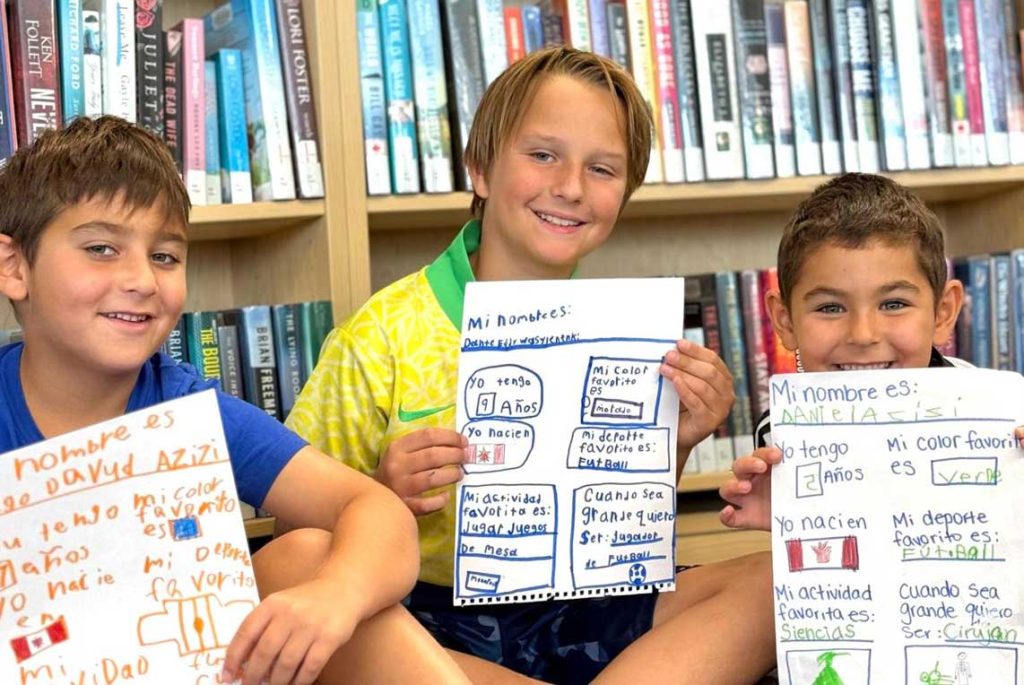
Starting age does not decide the format by itself.
Group classes can be excellent for children who enjoy learning around peers and benefit from a regular routine. Private lessons can make more sense when a child has a specific goal, an unusual proficiency profile or a schedule that does not fit current groups.
For GTA families, private lessons at your location can take place at home, a parent’s office, a library or another suitable location, subject to instructor availability. Virtual private lessons are another option when geography or travel is the main obstacle.
Age-appropriate teaching should actually look different.
Movement, stories, visual cues, songs, short activities and lots of interaction.
Conversation plus gradually increasing reading, writing and sentence building.
Relevant topics, more structure and a classroom culture where mistakes feel safe.
Real goals, mature topics, explicit language patterns and growing independence.
Your child can start even if Spanish is not spoken at home.
A qualified teacher can provide pronunciation, conversation, structure and feedback. Parents can support consistency without becoming the instructor.
Ask your child to teach you a phrase, listen to Spanish music together, find age-appropriate books or media and show genuine interest in what they are learning. Short, positive exposure between classes can help Spanish remain familiar.
For more on this, read Can My Child Learn Spanish If I Don’t Speak Spanish?
Common questions about what age to start Spanish
Is age 3 too young to start Spanish?
No. Three can be an excellent age when the program is designed for preschool development and uses play, movement, stories and repetition.
Is age 5 a good age to start?
Yes. Five-year-olds can still benefit from play-based learning while beginning to connect spoken Spanish with early literacy.
Is age 8 too late?
No. An eight-year-old has developing literacy and school-learning skills that can support strong progress.
Is age 10 too late?
No. Ten-year-olds can use reading, reasoning and memory strategies that younger learners do not yet have.
Can a teenager still become good at Spanish?
Absolutely. Teenagers can learn intentionally and connect Spanish to personally meaningful goals. Starting later changes the learning process, not the possibility of success.
Does starting early guarantee bilingualism?
No. Early exposure creates more time, but long-term proficiency depends on continued, meaningful contact with Spanish.
The best age to start is the age your child is now.
Do not delay because you think you missed a perfect window. Choose instruction that respects your child’s developmental stage, current Spanish and personality, then give the language enough consistency to grow.
