


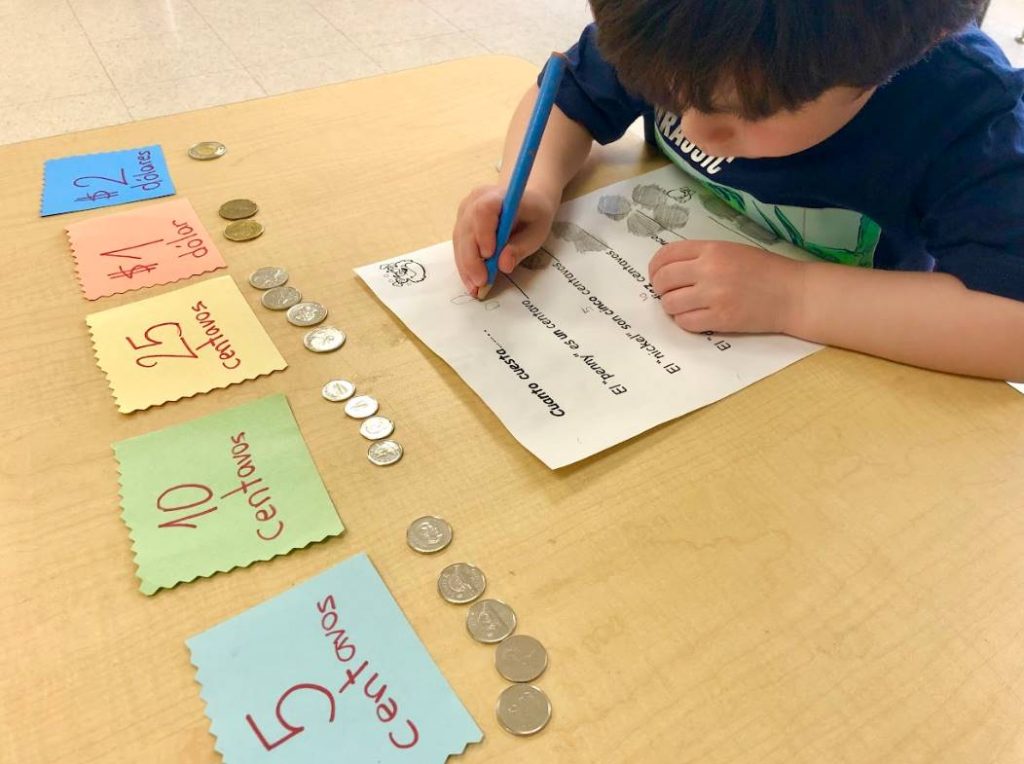
Yes. Your child can learn Spanish even if you do not speak it.
Parents do not need to become Spanish teachers for their children to make meaningful progress. Your role is different: create consistency, show interest and make room for Spanish to reappear between lessons.
A qualified teacher provides the language model. You provide the environment that says learning Spanish matters.
What should the teacher do, and what should the parent do?
| The Spanish teacher | The parent or caregiver |
|---|---|
| Models accurate Spanish and pronunciation | Makes attendance consistent |
| Plans age-appropriate progression | Shows interest without turning home into another classroom |
| Creates opportunities to listen and speak | Helps Spanish reappear through books, music and media |
| Gives feedback and adjusts difficulty | Encourages effort and curiosity |

You can support a language you do not speak.
Put on Spanish music in the car. Find a familiar story in Spanish. Let your child show you a word or phrase from class. Watch age-appropriate Spanish media together. None of this requires you to correct grammar.
One simple strategy is to let the child become the expert for a moment. Instead of testing them, ask, “Can you teach me one thing you learned?” That gives the child a reason to retrieve and explain the language.
Support does not need to become pressure.
Do not correct every attempt
Constant interruption can make a child less willing to speak.
Do not demand performances
“Say something in Spanish!” can make a learner freeze.
Do not worry about your accent
You do not need to model the language when a qualified teacher is doing that.
Do not make everything homework
Music, stories and media can keep Spanish familiar without another worksheet.
What helps at different stages?
| Age | Useful parent support |
|---|---|
| 3–5 | Songs, picture books, familiar routines and enthusiasm for participation. |
| 6–9 | Ask the child to teach you phrases, revisit class vocabulary and use age-appropriate media. |
| 10–13 | Connect Spanish to interests and give the child room to make mistakes without performing. |
| 14–17 | Help connect Spanish to a personal goal such as travel, school, family or future work. |
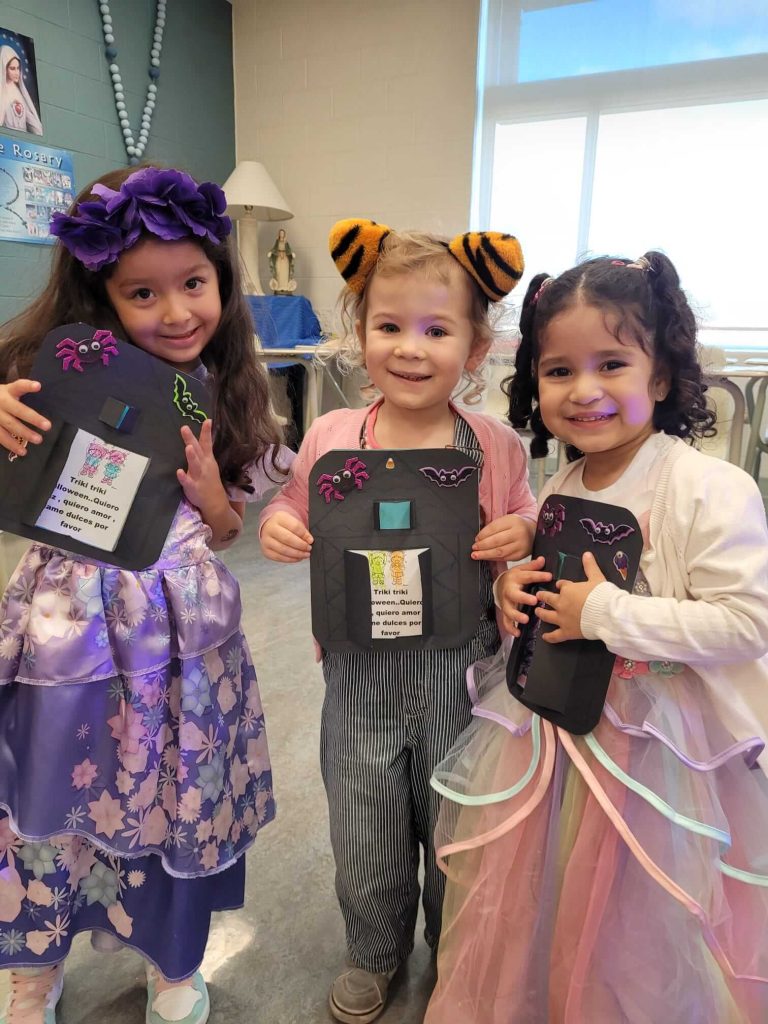
“My child understands, but answers in English.”
This can happen when comprehension is ahead of speaking confidence. It does not mean nothing is being learned. A child may understand a question immediately but still need more time and practice before producing an answer comfortably.
Avoid turning every response into a correction. Give the teacher room to build speaking gradually and tell them about any Spanish your child already hears at home.
Can one class a week still be worthwhile?
Yes. A weekly class can provide a regular source of structured Spanish. Short exposure between classes helps keep the language familiar, but parents do not need to recreate the lesson at home.
A simple weekly routine for a non-Spanish-speaking family
Attend consistently
Protect the regular class time whenever possible.
Revisit Spanish briefly
Use a song, story or short piece of age-appropriate media during the week.
Let your child teach you
Ask for one word, phrase or idea rather than a performance.
Notice progress
Look for faster understanding, more participation and longer responses over time.
When might private instruction help?
Private lessons can be useful when a child has previous exposure, needs targeted help, is hesitant in a group or has a schedule that does not match current classes. GTA families can explore private lessons at your location, while virtual private lessons provide individualized instruction without travel.
Common questions from parents
Do I need to speak Spanish to help my child?
No. Consistency, encouragement and opportunities to encounter Spanish are useful even when you cannot teach the language yourself.
Should I correct my child’s Spanish?
You do not need to correct every attempt. Let the teacher provide structured feedback and focus at home on keeping the child comfortable using the language.
Can books and music help if I do not understand them?
Yes. Choose age-appropriate material and treat it as additional exposure rather than a test.
What if my child answers in English?
Understanding can develop ahead of confident speaking. Share this with the teacher and give speaking time to develop.
You do not need to speak Spanish to raise a successful Spanish learner.
Your most useful role is to make learning consistent, positive and worth returning to. Let qualified instruction provide the language model and use home life to keep curiosity alive.
