Canada has always been a multilingual country. English and French remain its two official languages, but the languages Canadians use at home, at work and in their communities continue to evolve. Among them, Spanish has taken on a particularly important role.
According to Statistics Canada, Spanish was the most widely spoken non-official language in Canada in the 2021 Census, with approximately 1.2 million people able to speak it. That placed Spanish ahead of Mandarin and Punjabi and confirmed something many Canadians already experience in their schools, neighbourhoods and workplaces: Spanish is becoming a meaningful part of everyday life in Canada.
Its importance also extends far beyond the country’s borders. Spanish connects Canadians with people, cultures and markets across North America, Latin America, the Caribbean and Spain. For children, it can become a lifelong communication skill. For adults, it can support travel, relationships and personal development. For professionals and businesses, it can help create stronger connections with clients, colleagues and international partners.
Learning Spanish in Canada is no longer only a hobby or a skill reserved for people planning a vacation. It is an increasingly practical investment in communication, cultural understanding and future opportunity.
Spanish Is the Most Spoken Non-Official Language in Canada
The clearest reason Spanish is becoming more important in Canada is that it is already widely spoken here.
Statistics Canada reported that around 10.7 million people, nearly three in ten Canadians, could have a conversation in a language other than English or French in 2021. Spanish led all non-official languages, with about 1.2 million speakers.
This matters because language becomes more useful when learners have opportunities to hear it, speak it and build real relationships through it. In communities across Toronto and the Greater Toronto Area, Spanish can be heard in schools, stores, restaurants, community organizations, cultural events and workplaces. Canadians who learn it may be able to communicate more meaningfully with neighbours, classmates, customers, friends and extended family members without ever leaving the country.
Canada’s multilingual character is also visible within the home. Census data showed that more than 3.1 million Canadian households were multilingual in 2021. This means that learning another language reflects the reality in which many Canadian children are already growing up.
Spanish is therefore both an international language and a Canadian community language. Its value comes from its global reach, but also from its growing presence close to home.
Canada Is Becoming More Connected to the Spanish-Speaking World
Spanish is spoken across a large and diverse international community. It is an official language in 21 countries and is used by hundreds of millions of people around the world. The Instituto Cervantes reports that more than 630 million people can speak Spanish, including approximately 520 million people with native-level proficiency.
For Canadians, this reach is especially significant because many Spanish-speaking countries are located within the Americas. Canada’s relationships with Mexico, Central America, South America and the Caribbean include trade, tourism, education, immigration, diplomacy and cultural exchange.
The Government of Canada reports that two-way merchandise trade between Canada and Mexico reached nearly $56 billion in 2024. Canada and Mexico are also connected through the Canada-United States-Mexico Agreement, commonly known as CUSMA. More broadly, Canada’s trade with Latin America and the Caribbean grew by more than 36 per cent between 2018 and 2024, rising from $70 billion to $95 billion, according to Global Affairs Canada.
Not every Canadian who learns Spanish will work in international business, of course. These figures still show why the language is increasingly relevant. Canada is economically, socially and geographically connected to a large Spanish-speaking region, and those connections are continuing to deepen.
Spanish Can Be a Valuable Career Skill
English and French remain central to employment in Canada, but Spanish can provide an additional communication advantage in many professions.
The value of Spanish will vary by position, industry and location. It can be especially useful in fields where employees regularly work with the public or communicate across borders, including:
- Tourism and hospitality
- Customer service and sales
- International business and trade
- Education and childcare
- Healthcare and community services
- Law, immigration and social services
- Transportation and logistics
- Marketing, media and communications
- Government, diplomacy and nonprofit work
A second language does not automatically guarantee a job or promotion. What it can do is expand the number of people someone is able to serve and the situations in which they can communicate confidently. A professional who can welcome a Spanish-speaking client, understand a basic request or participate in a conversation with an international colleague may bring added value to an organization.
For businesses, Spanish language training can also support more inclusive service and stronger relationships. Even when complete fluency is not required, practical vocabulary and confident conversation can make customers and colleagues feel understood.
The benefits are not limited to adults already in the workforce. Children who begin learning Spanish today have time to develop genuine proficiency before they start applying to universities or entering their careers. The industries and opportunities they pursue may change, but the ability to communicate across languages will remain useful.
Learning Spanish Helps Canadians Participate in Their Own Communities
Language learning is often described as preparation for international travel, but one of its greatest benefits may be much closer to home.
Spanish-speaking Canadians come from many different countries and cultural traditions. Learning the language creates opportunities to take part in conversations and experiences that might otherwise remain less accessible. It can help children connect with classmates, adults communicate with neighbours and families build stronger relationships across generations.
For heritage learners, Spanish classes may offer a structured way to strengthen a language already present in the family. A child may understand a parent or grandparent but need support developing vocabulary, reading, writing or speaking confidence. Formal instruction can help turn partial understanding into a skill the child can use with pride.
For learners without a Spanish-speaking background, the language creates a new path into Canadian multicultural life. They can engage more deeply with music, literature, celebrations, food, history and perspectives from a wide range of Spanish-speaking communities.
Learning Spanish does not simply teach someone how to translate words. It can help them understand how other people express ideas, build relationships and experience the world.
Spanish Makes Travel More Meaningful
Spanish is one of the most practical languages a Canadian traveller can learn. It is widely used in destinations throughout Mexico, the Caribbean, Central America, South America and Spain, including many places Canadians visit regularly.
Travellers do not need perfect Spanish to benefit from it. Knowing how to greet someone, ask a question, read a sign, order a meal or explain a need can make a noticeable difference. It can reduce uncertainty and make travel feel more independent.
More importantly, speaking even some Spanish can change the quality of an interaction. Instead of experiencing a destination only through hotels and tourist services, travellers can communicate more directly with local residents. They may learn about a community, receive a recommendation or share a conversation that would not have happened in English.
For children, using Spanish on a family trip can also make classroom learning feel real. A few familiar words on a menu or a successful exchange with a Spanish speaker can show them that the language is not simply another school subject. It is a practical way to connect with people.
Why Spanish Is an Especially Strong Choice for Children
Parents often wonder which second or third language will be most useful for their child. There is no single answer for every family, but Spanish offers a compelling combination of local relevance and international reach.
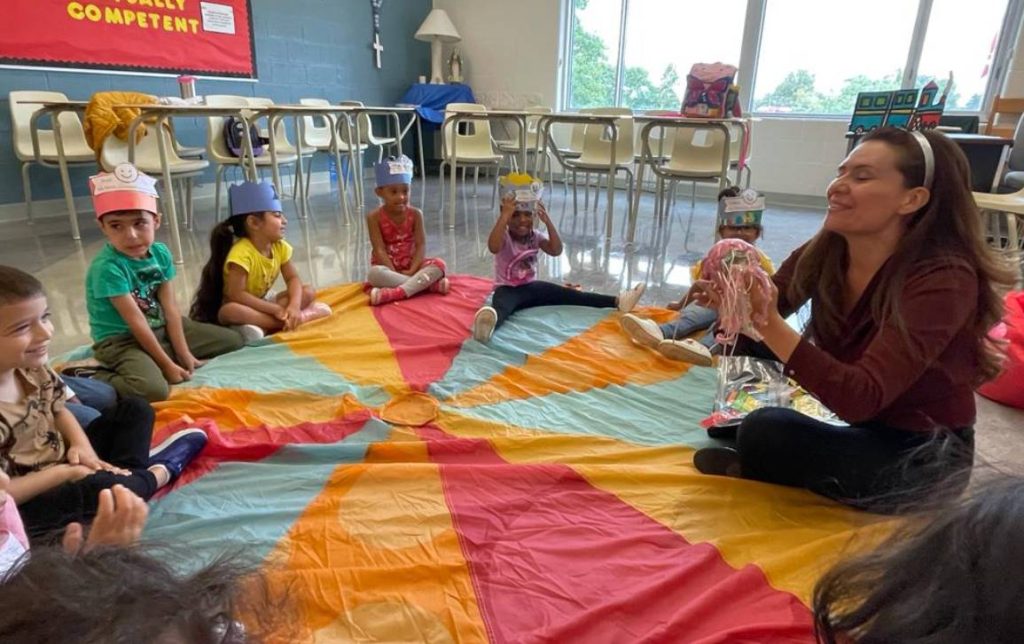
Children who learn Spanish gain access to a language they can encounter in Canada, use while travelling and continue developing throughout school and adulthood. Because Spanish is so widely spoken, learners can also find a large amount of age-appropriate music, books, television, games and other material to support continued exposure.
Starting young gives children time. They do not have to rush toward fluency or worry about speaking perfectly. They can become familiar with the sounds of Spanish, build vocabulary gradually and learn to communicate through songs, movement, games, stories, projects and conversation.
An engaging learning environment is important. Children are more likely to continue when Spanish feels connected to play, creativity and real communication instead of memorizing long vocabulary lists. Positive early experiences can help them become comfortable making mistakes, trying new phrases and speaking in front of others.
Learning Spanish can also encourage curiosity about cultures beyond a child’s immediate experience. In a diverse country such as Canada, that curiosity can help young people communicate with greater openness and respect.
Families can explore Spanish classes for children and teens at The Spanish Schoolhouse, including age-appropriate programs for learners from ages 3 to 17.
Adults Can Start Learning Spanish at Any Age
Spanish is not only a skill for children. Adults begin learning for many reasons: an upcoming trip, a relationship, a career goal, a family connection or simply the satisfaction of doing something new.
Adult learners may worry that they started too late or that they need to memorize every grammar rule before speaking. In reality, useful progress begins with consistent practice. Learning how to introduce yourself, ask common questions and understand everyday expressions creates a foundation that can grow over time.
Live instruction can be especially helpful because language is interactive. A teacher can respond to questions, explain why an expression is used and give learners an opportunity to practise conversation in real time. This helps turn passive knowledge into communication.
The Spanish Schoolhouse offers live online Spanish classes for adults at different proficiency levels, making it possible to learn with a real teacher from home.
Technology Has Made Spanish More Visible, but Conversation Still Matters
Spanish-language music, films, television, podcasts and social media are now easy for Canadians to access. This exposure has helped make Spanish more familiar and can be an excellent supplement to formal learning.
Apps and digital tools can support vocabulary practice, repetition and review. They are convenient, especially for short daily exercises. However, understanding a lesson on a screen is different from participating in a real conversation.
Conversation requires a learner to listen, interpret meaning and respond in the moment. It also involves pronunciation, tone, body language and the confidence to continue even when a sentence is not perfect. Those skills develop through interaction.
The strongest approach often combines the accessibility of technology with live instruction and meaningful practice. Learners can review independently, then use what they know with a teacher and other students.
Spanish Is a Skill That Can Grow With You
One reason Spanish is such a valuable language to learn is that it can remain relevant through many stages of life.
A young child may begin with greetings, colours and songs. Later, that child may read stories, hold conversations and learn about different cultures. As a teenager, Spanish may support schoolwork, volunteering, travel or an exchange program. In adulthood, the same language may become useful in a career, a friendship or a family relationship.
Adults experience the same long-term potential. Someone who starts learning for a vacation may later use Spanish with a client, continue into an advanced course or become more engaged with a Spanish-speaking community.
Language development is gradual. Learners do not need to wait until they are fluent before Spanish becomes useful. Every stage creates new possibilities, from recognizing familiar words to having an entire conversation.
How to Begin Learning Spanish in Canada
The best starting point depends on the learner’s age, experience and goals. Before choosing a program, consider a few practical questions:
- Is the learner a complete beginner or do they already understand some Spanish?
- Is the main goal conversation, reading and writing, travel, school support or professional communication?
- Would the learner benefit most from a group environment or private instruction?
- Is in-person learning preferred, or would a live online class be more convenient?
- Can the learner commit to regular practice between classes?
Consistency is more valuable than trying to learn everything quickly. A well-designed program should introduce useful language at an appropriate pace, provide opportunities to speak and make learners feel comfortable participating.
At The Spanish Schoolhouse, children and teens can join engaging in-person programs in the Greater Toronto Area. Adults can learn through live, teacher-led online classes, and private or customized instruction is also available for learners and organizations with specific goals.
The Growing Importance of Spanish in Canada
Spanish is becoming more important in Canada because Canada itself is becoming more multilingual and more connected to the Spanish-speaking world. It is already the country’s most widely spoken non-official language. It is present in Canadian homes, schools, workplaces and communities, while also connecting learners to hundreds of millions of people internationally.
For children, Spanish can become a lifelong ability that grows alongside them. For adults, it can make travel, work and relationships more rewarding. For businesses, it can strengthen communication with clients, employees and partners.
The greatest value of learning Spanish is not found in a statistic, however. It appears in the moment a learner understands someone, joins a conversation or forms a connection that would not have been possible before.
As Canada continues to grow and change, the ability to communicate across languages will become even more meaningful. Learning Spanish now gives Canadians a practical way to prepare for that future while connecting more deeply with the diverse country they already call home.
Ready to Start Learning Spanish?
The Spanish Schoolhouse has helped learners build confidence in Spanish since 2004. We offer engaging Spanish programs for children and teens in the Greater Toronto Area, plus live online Spanish classes for adults at different proficiency levels.
Explore our class locations or book a trial class to find the right place to begin.
Frequently Asked Questions
Is Spanish widely spoken in Canada?
Yes. According to the 2021 Census, approximately 1.2 million people in Canada could speak Spanish. Statistics Canada identified it as the most widely spoken non-official language in the country.
Why is Spanish important for Canadians?
Spanish helps Canadians communicate within increasingly multilingual communities and connect with people across the Americas, the Caribbean and Spain. It can be useful for travel, relationships, cultural understanding, customer service and certain professional roles.
Is Spanish useful for jobs in Canada?
Spanish can be an asset in roles involving the public, international markets or Spanish-speaking clients and communities. Its value depends on the job, but it may be especially relevant in tourism, business, education, healthcare, social services, sales and customer service.
Is Spanish a good language for children to learn in Canada?
Yes. Spanish combines a strong Canadian presence with broad international use. Children can encounter it in their own communities, use it while travelling and continue developing it for future academic, personal and career opportunities.
Can adults successfully learn Spanish?
Yes. Adults can make meaningful progress at any age through regular exposure, useful practice and opportunities to speak. Live classes can provide structure, feedback and real-time conversation practice.
Do I need to speak Spanish for my child to learn it?
No. Children can learn Spanish successfully even when their parents do not speak the language. Families can support progress by showing interest, encouraging practice and adding age-appropriate Spanish books, music or media at home.